
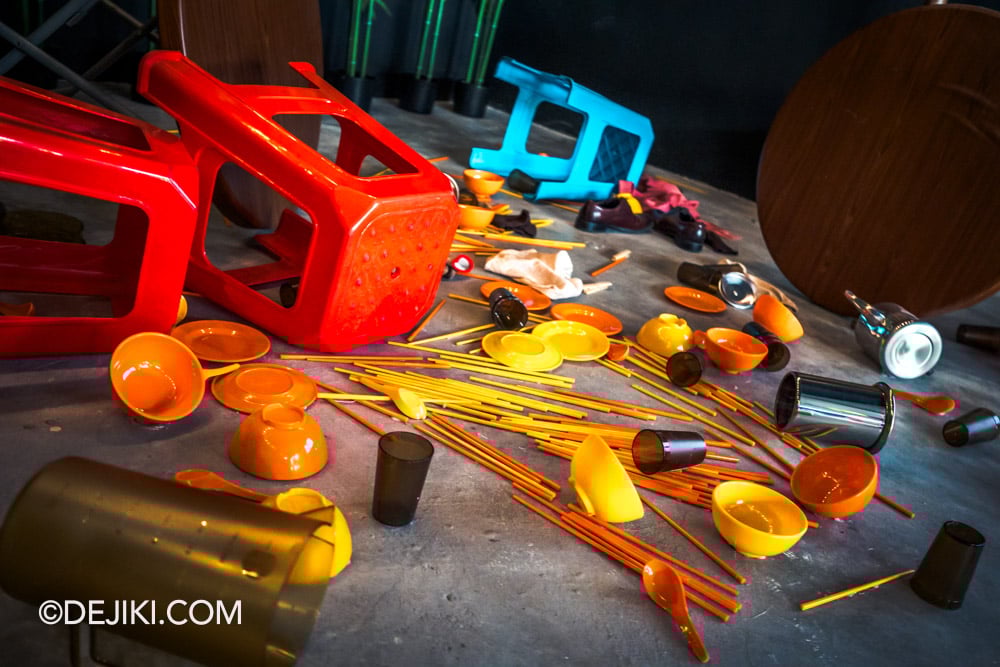
Go on a city-wide journey of rediscovery as Singapore Biennale 2025 brings pure intention in these new encounters and moments for reflection.
Singapore Biennale 2025: pure intention
The highly anticipated Singapore Biennale 2025 (SB2025) is set to unfold from 31 October 2025 to 29 March 2026, inviting you to embark on a journey to rediscover the city and encounter art outside of galleries. Presented as an SG60 signature event to mark Singapore’s 60th birthday, this edition of the Biennale promises to foster deep reflections on contemporary life and our collective future.

Organised by the Singapore Art Museum (SAM), this eighth edition is anchored by the theme pure intention, bringing new works that are immersive, site-responsive, and often participatory. These new encounters open new ways for the audience to see, feel and connect through art.
The Biennale is one of my favourite art activities, having attended almost every edition since the very first back in 2006. This year, I was fortunate to attend the media preview and had an early peek at some of the artworks and installations at Tanjong Pagar Distripark, Lucky Plaza, Far East Shopping Centre, Tanglin Halt, and National Gallery Singapore.
As with past editions, the works are scattered across many places and it is not easy to visit them all within a day. This is not a race, and also not a marathon. The Biennale is best consumed in moderate amounts, so do pace yourself as you explore Singapore with pure intention and encounter art in some unexpected spaces.
Highlight Artworks of Singapore Biennale 2025
The Singapore Biennale 2025 takes place across multiple venues, where you can discover over 100 works sorted into districts: Singapore Art Museum, Rail Corridor, Orchard and Civic District. Most works are available for free access to the public, although certain public spaces and buildings where works are sited may have official opening hours.
This article features a selection of highlight artworks previewed for the media, and does not represent the full selection of works and experiences as part of SB2025.
Singapore Art Museum (SAM) at Tanjong Pagar Distripark
SAM is the ‘main’ site for SB2025, with the largest collection under one roof. There are works to see before you even step in the main gallery.
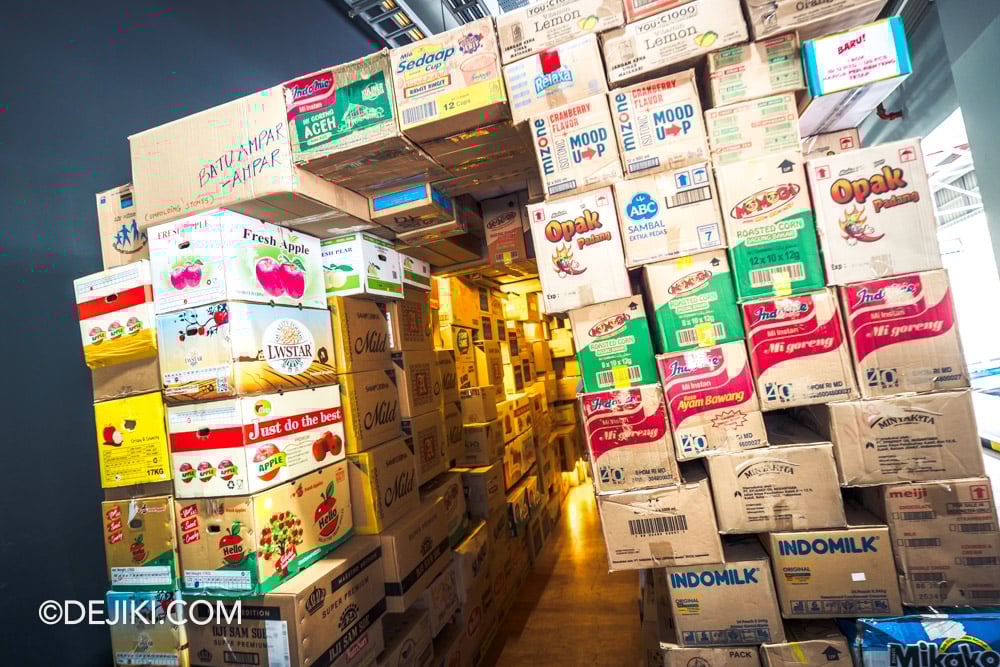
Don’t mistake this neatly stacked ensemble of boxes to be someone’s shopping haul. This is Metabolic Container (CAMP), built from 400 cardboard boxes filled with goods—like crackers, perfume, and spices, things that travel every week from nearby Batam to Singapore.

The stacked parcels look like a ship’s cargo hold, making a direct link between the huge world of shipping and our own daily habits and what we consume.
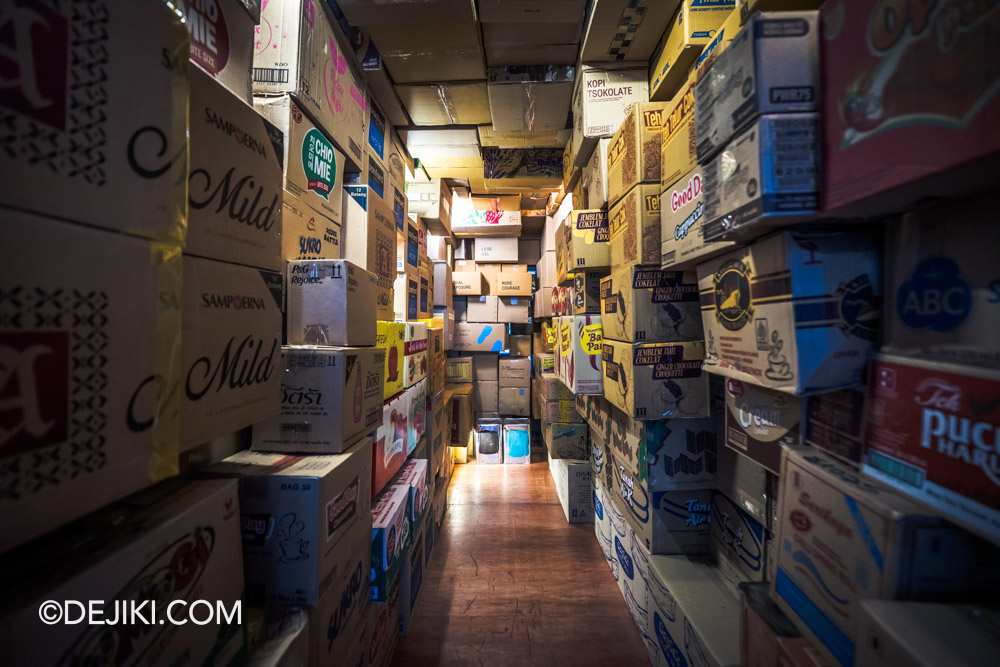
Step inside to take a closer look at the boxes, as they slowly shift and change.

Right beside the ticket counter is Khara En Tria – Joyer in 3 (Paul Chan). Three brightly colored fabric figures are sewn together in a circle, performing a disjointed, ecstatic dance, constantly moving. They are basically “breathing sculptures,” powered by electric fans that cause them to inflate and deflate in a rhythmic, dancing pattern.
Their movements change all the time, showing a wide range of human feelings, from hopelessness to pure joy. What a way to start your tour inside SAM.
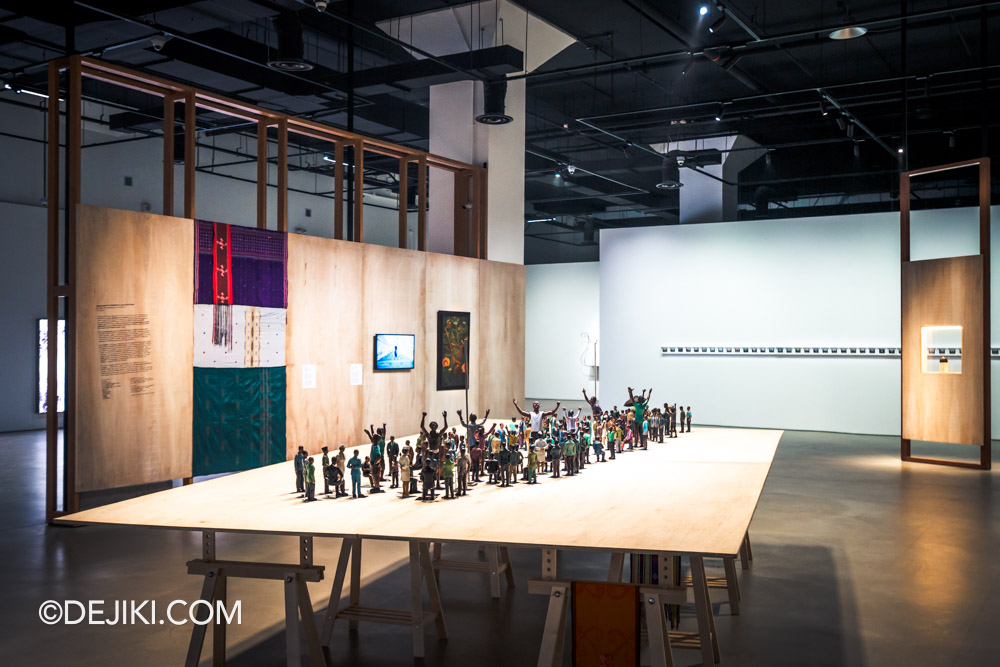
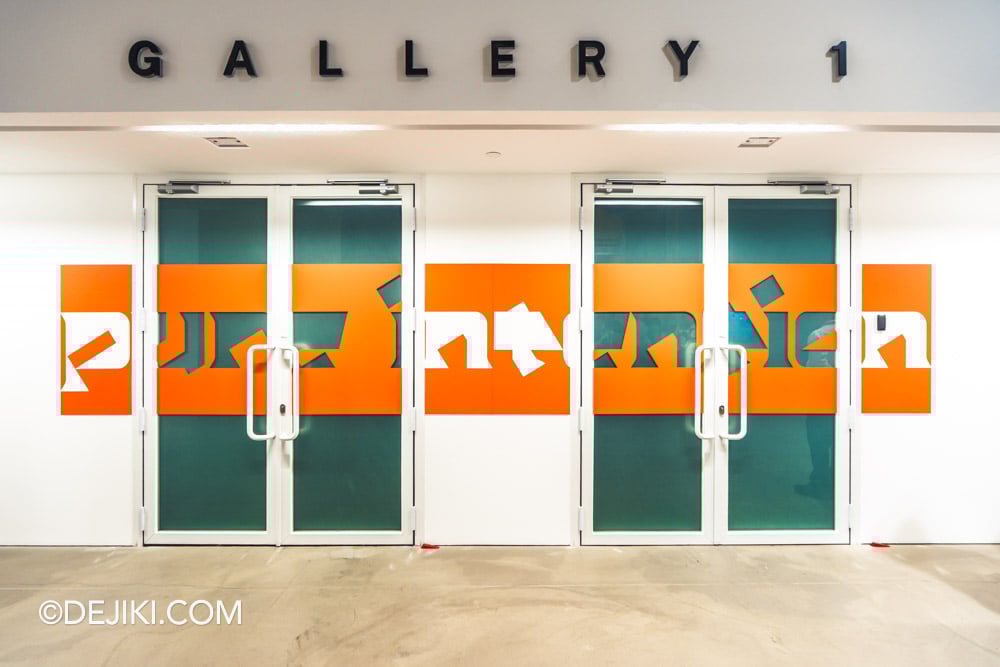
Inside Gallery 1 is a curated experience that challenges how we think about progress. Admission to the gallery is ticketed.
Instead of showing a simple, continuous timeline of development, the gallery mixes art about disasters with art about achievements. This highlights the ongoing cycle of creating and destroying that happens in life and history.
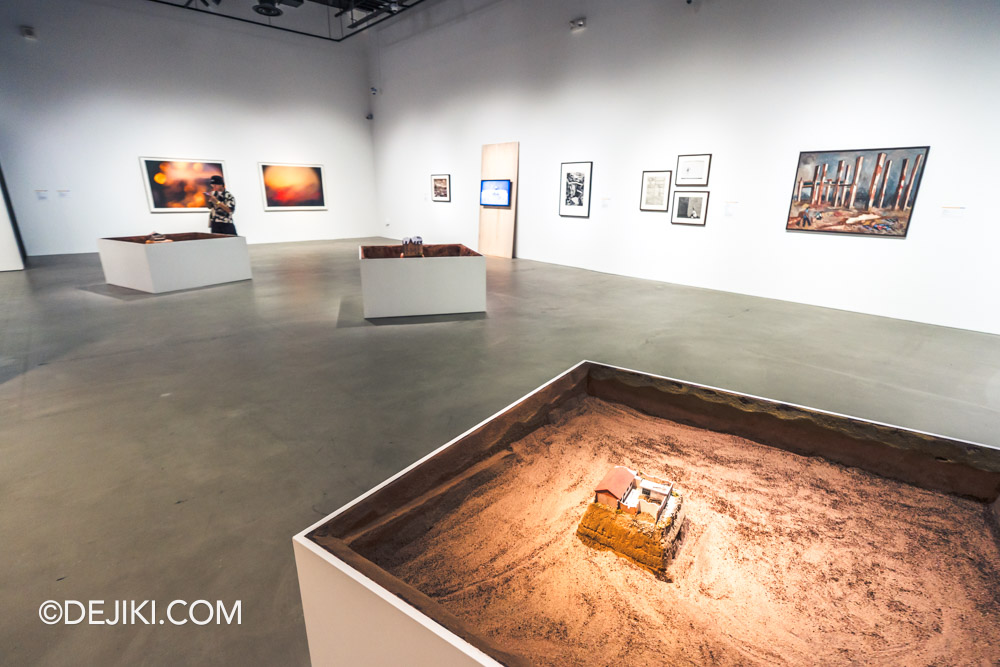
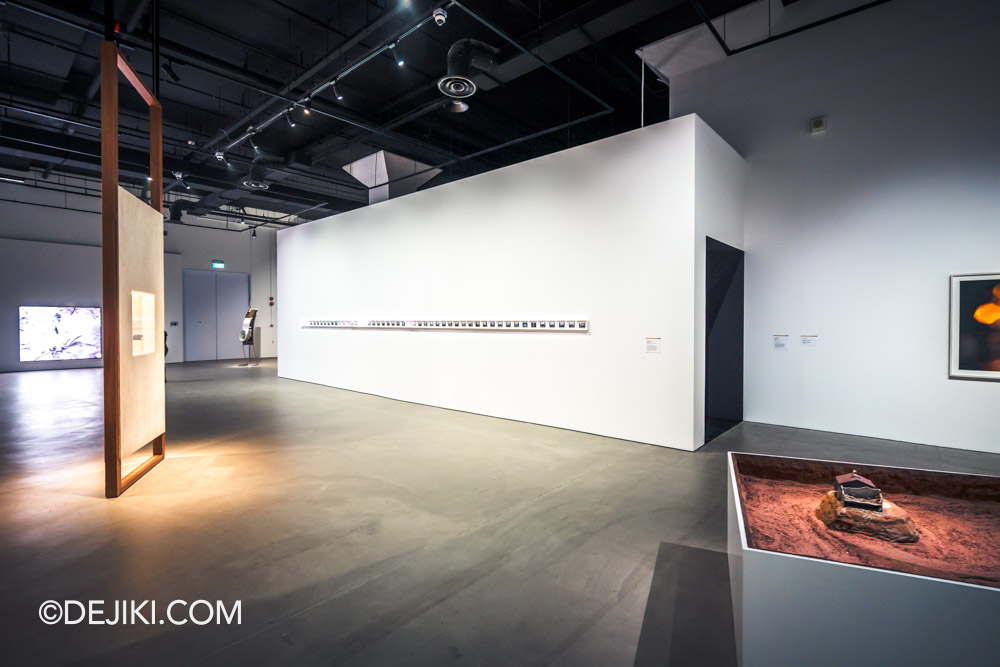
Some works focus on absence – things that are physically, mentally, or spiritually missing. One of my favourites is Pleasure Places of All Kinds (Ahmet Öğüt) – a series of 3 scale models placed on clean white stands but are surrounded by raw, excavated dirt. These are “nail houses” – created when the home owner refuses to sell to developers, even when massive construction projects are happening all around them. By digging their heels in, these holdouts turn their refusal to move into a powerful political and economic act. The houses become lasting, visible marks of defiance on the landscape for everyone to see.
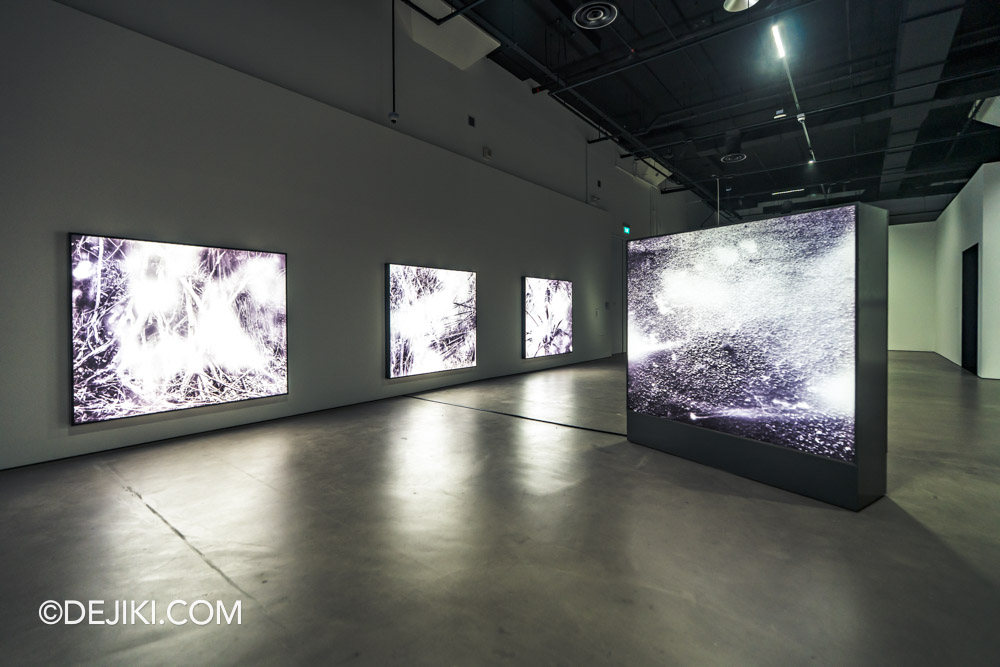
Blowing in the Wind (Fiona Amundsen) series refers to “downwinders”: the people and communities who were directly exposed to the radioactive materials carried by the wind. These large photos presented in lightboxes capture the eerie reality of nuclear contamination.
At the back of Gallery 1 is an installation that is quite hidden. This is Offspring (Pierre Huyghe), a work so elusive that the artist has requested that we do not photograph it at the preview so that everyone can experience it in person. Powered by an AI program that controls elements like light, smoke, and sound, the work reacts to the gallery environment and the movement of visitors. Essentially, the artwork is never the same twice.

Unsent Parcel (Ju Young Kim) features an old aluminum suitcase with a shipping label addressed to the artist’s grandfather at his last known address in North Korea. When you look inside, a soft light reveals an enlarged image of the artist’s own palm, hinting a personal touch hidden within the suitcase.

Thermal Landscapes (Cui Jie), on view with a rounded form of a kentongan (slit drum) in the foreground. This is one of the largest work on display, which is best viewed up-close and far away. The painting takes buildings that were once celebrated as landmarks of progress and mixes them with ceramic figurines. But the further you step away, you see these city symbols: buildings, figurines, and land motifs, all appear to be drifting in a vast ocean, but yet they are all interconnected by a web of undersea cables.

Another standout piece is Garden City (Orchidaceae) (Álvaro Urbano), which resembles a hanging garden with sculptural plants made of steel.

The way light and shadow shift across these forms as you walk around it reflects on the history of agriculture in the region, particularly the stories of plantations and diplomatic gifts like orchids.
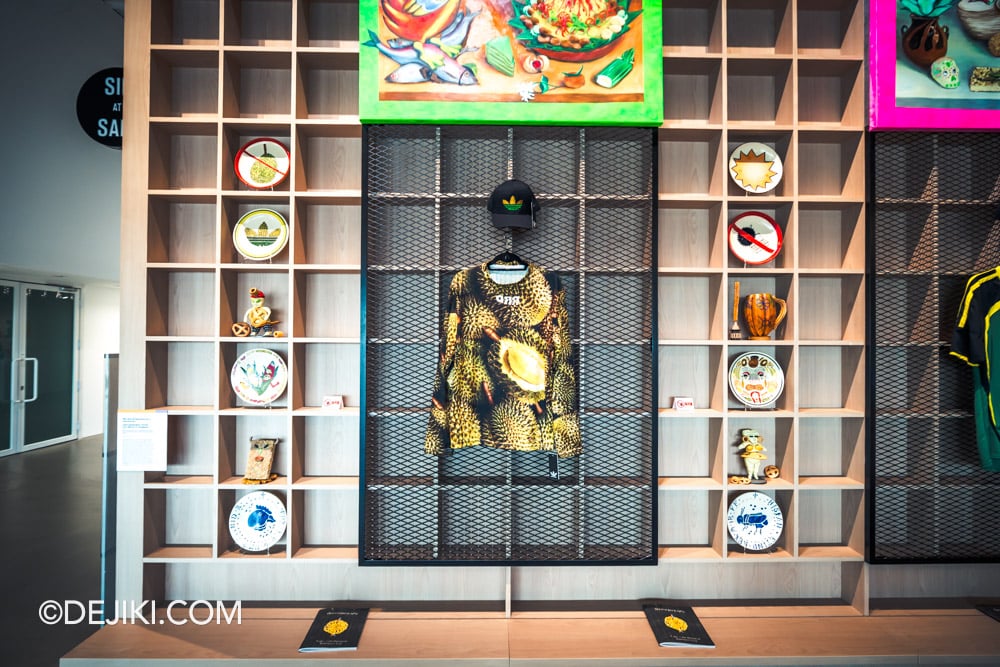
SAM’s cafe and store, SIP at SAM also becomes part of the Biennale, as Gastrogeography Stories from Mexico to Singapore (RRD (Red de Reproducción y Distribución)) has taken over the space.

Everyday items related to food—like cookbooks, food magazines, packaging from street food, and materials found at Mexican roadside stalls have transformed into a visually engaging display – almost like a retail store.

It attempts to show the surprising links and shared global histories between Singapore and Mexico, all through the lens of their unique and colourful food cultures. Something as simple and relatable as a meal offers a way to explore how our worlds are connected.
Art you can consume, literally

There’s an artwork you can drink. Momocha (Huang Po-Chih) is a multi-location project collaborating with local Singaporean brand, Moon Juice Kombucha. The artist has created kombucha brews using spices, herbs, and crops sourced directly from his hometown in Taiwan.
Each unique flavour represents the mix of cultures, travel, and memories tied to food and farming, showing how agriculture, migration, and memory are connected in a delicious, drinkable form.
You can try these unique kombucha flavours from vending machines at the National Gallery Singapore and 20 Anderson Road, and at SIP at SAM (the museum’s café).
Singapore Biennale 2025 pure intention merchandise

As the main site for Singapore Biennale 2025, you can find the pure intention collection of merch at SIP at SAM.

For those who have been collecting Singapore Biennale tote bags, you can grab the SB2025 bag for just $5 when you show your SB2025 ticket.
Singapore Biennale 2025 at Orchard: A different side of the shopping belt
At SB2025, you can encounter art at famous spots in Orchard. Placing art inside these strata-titled malls challenge the idea that these spaces are only for retail, emphasising their role as vital gathering points for diverse communities.

At the Lucky Plaza mall, art steps directly into everyday life, with two shop units reimagined in unexpected ways.
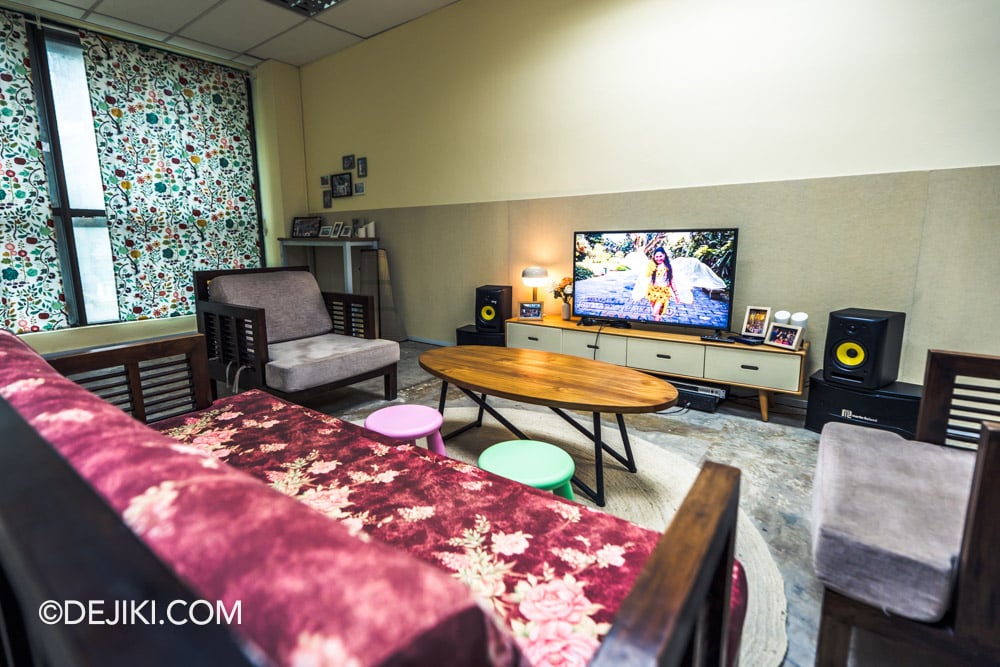
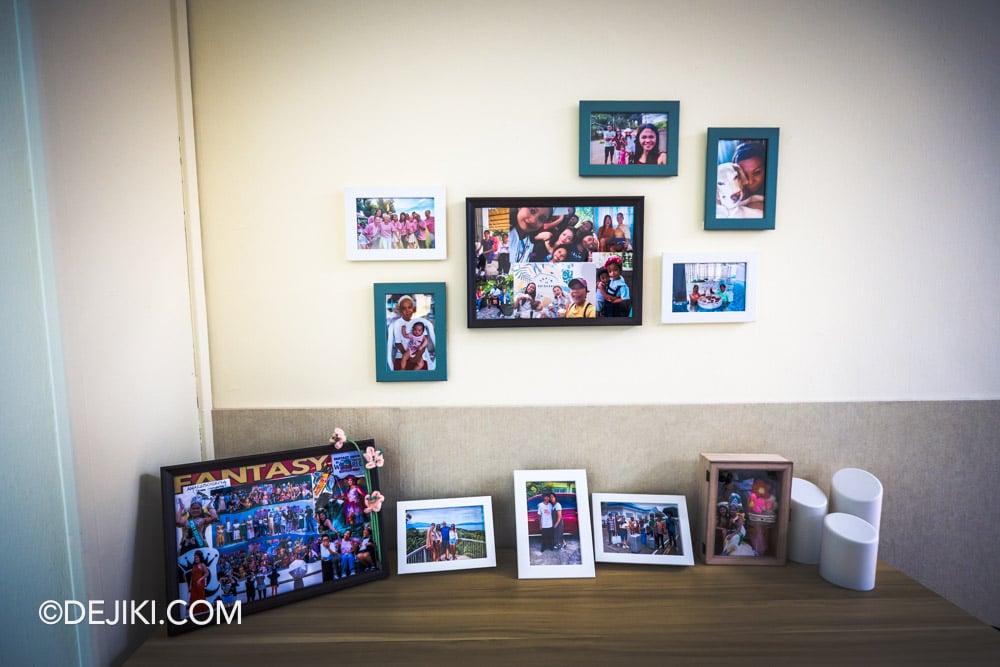
Created in collaboration with Filipino domestic workers, The Filipino Superwoman x H.O.M.E. Karaoke Living Room (Eisa Jocson) invites you to step inside this cozy living room and sing along to new karaoke videos. Around the room are other corners with stories to tell.
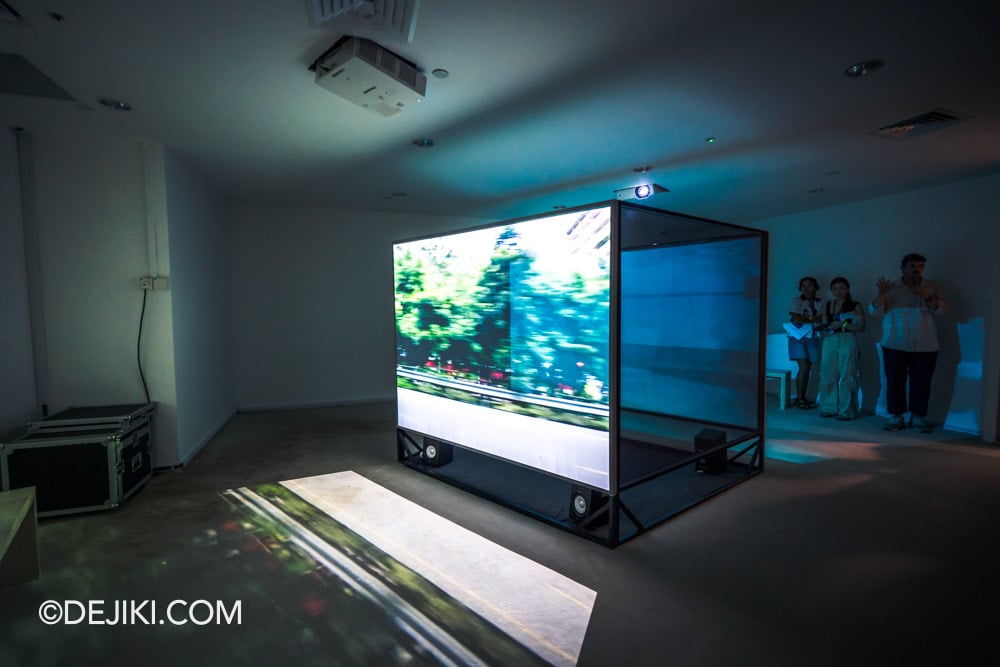
In contrast, On a Clear Day You Can See Forever (Tan Pin Pin) uses film footage to highlight the strange contrasts in Singaporean life. Projected across each other and completely overlapping: one side shows the late Inuka, Singapore’s first polar bear born in captivity, swimming in his artificial Arctic habitat. The other side shows dashcam footage of the city moving at a fixed, fast speed.
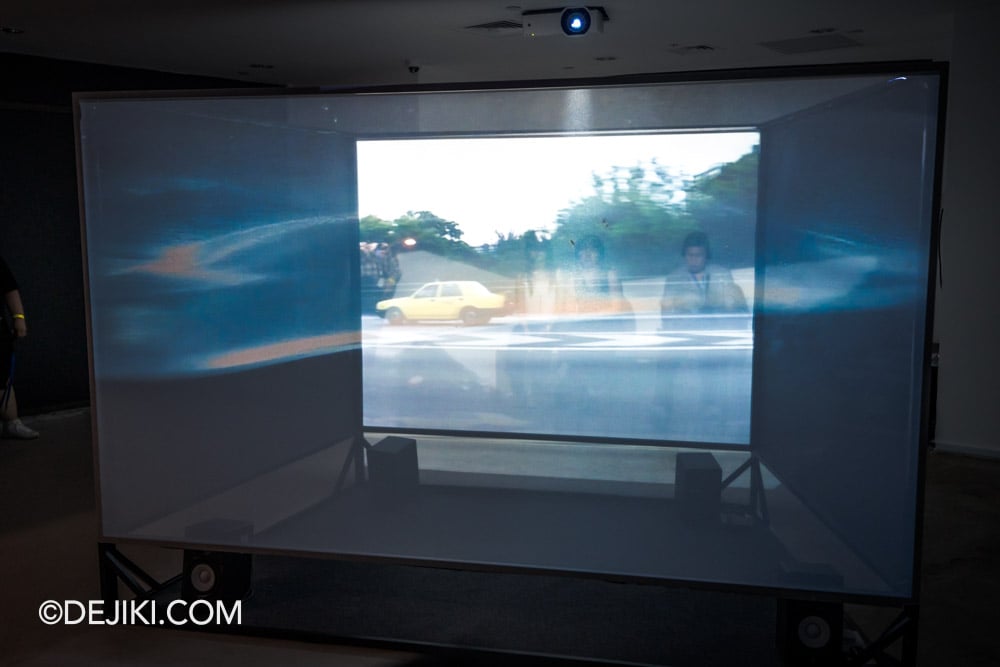

More works can be found at Far East Shopping Centre (not Far East Plaza) right across from the iconic Hermès store.
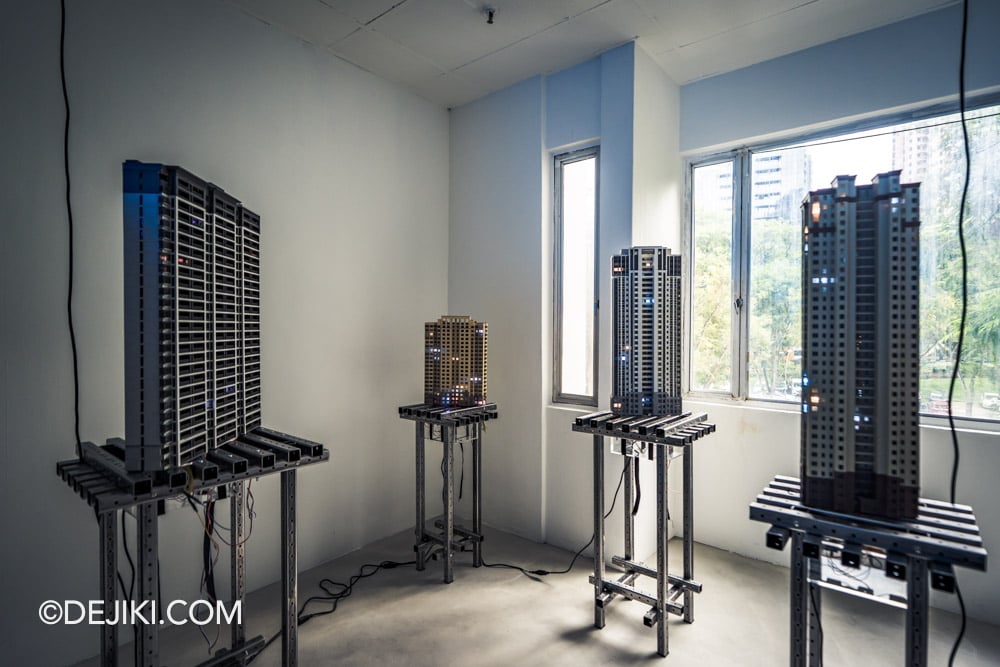
entropy study (Yuri Pattison) houses a collection of miniature buildings to ponder about financial risk and our deep-seated need to know what’s coming next. These scale models that were originally made to help sell properties in China. After the onset of an ongoing real estate crisis, these models were bought from second-hand shops. They now stand tall in these room, like physical evidence of a major financial crisis.
To make them more unsettling, tiny lights inside the models flicker based on actual Geiger counters detecting radiation. The uncertain changes and clicking sounds hint at invisible, unknown forces at play.
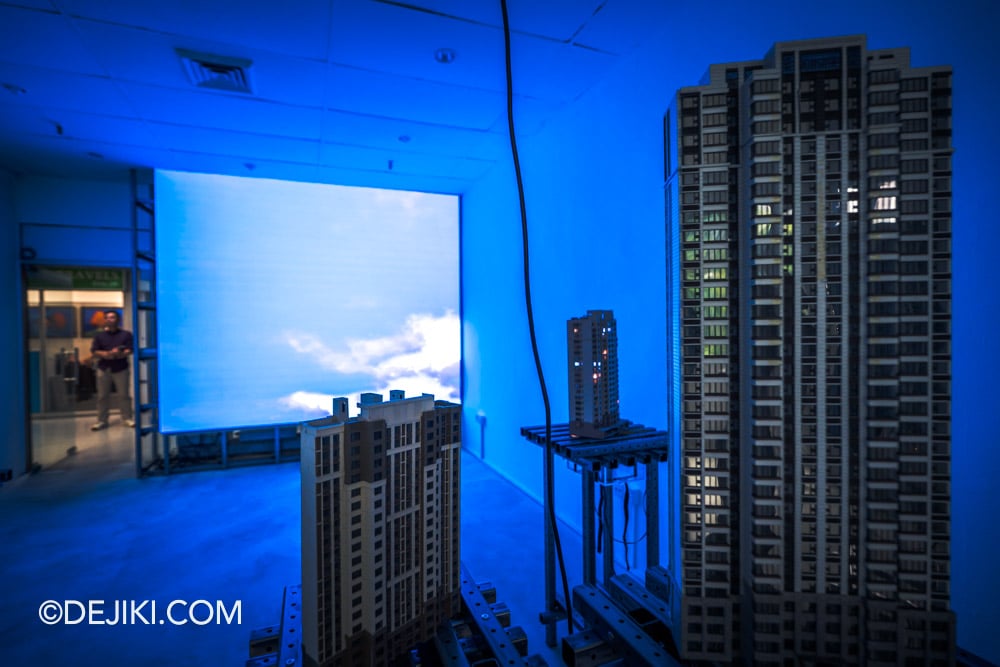
This work can be viewed with another by the same artist within the same shop unit: cloud gazing (americium) (Yuri Pattison).
Next to the models, a wall display shows an ever-changing animation of an open sky. The clouds are created in real-time using a quantum random number generator – a source of pure, unpredictable randomness.
It is like a modern version of ancient fortune-telling by reading clouds. By placing this random sky next to the failed building models, the works hint that the complex math used in financial planning and climate prediction are still fundamentally driven by the same old human desire: to try and control an uncertain future.

Lure (Jiajia Zhang) series feature a mirror sculptures made from cardboard display stands that have been stripped down. Hidden behind each stand is a small video monitor showing short films created by the artist.
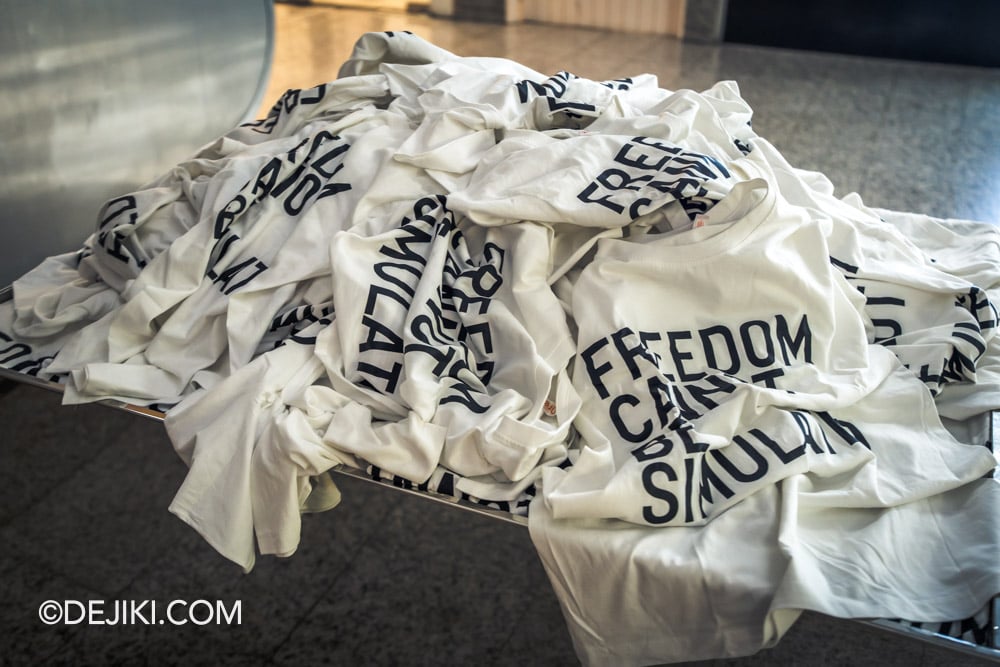
This is another artwork you can consume. untitled 2016 (form follows function or vice versa no two) (Rirkrit Tiravanija) is a hands-on experience, inviting you to participate by taking an item for free. At the basement of Far East Shopping Centre, there is a simple display where you can grab a free T-shirt. By taking it, you are claiming a piece of art and turning a simple act of consumerism into a cultural experience.
The T-shirts feature the printed phrase: “Freedom cannot be simulated” which challenges the idea of freedom we often see advertised or performed in a world full of manufactured images and promises.

Water Under The Bridge / A Bridge Under Water (The Packet) is titled using two phrases about bridges to explore the relationship between the past and the future. This work is set up like an internet cafe in the 2000s, before the era of smartphones and internet on our fingertips.
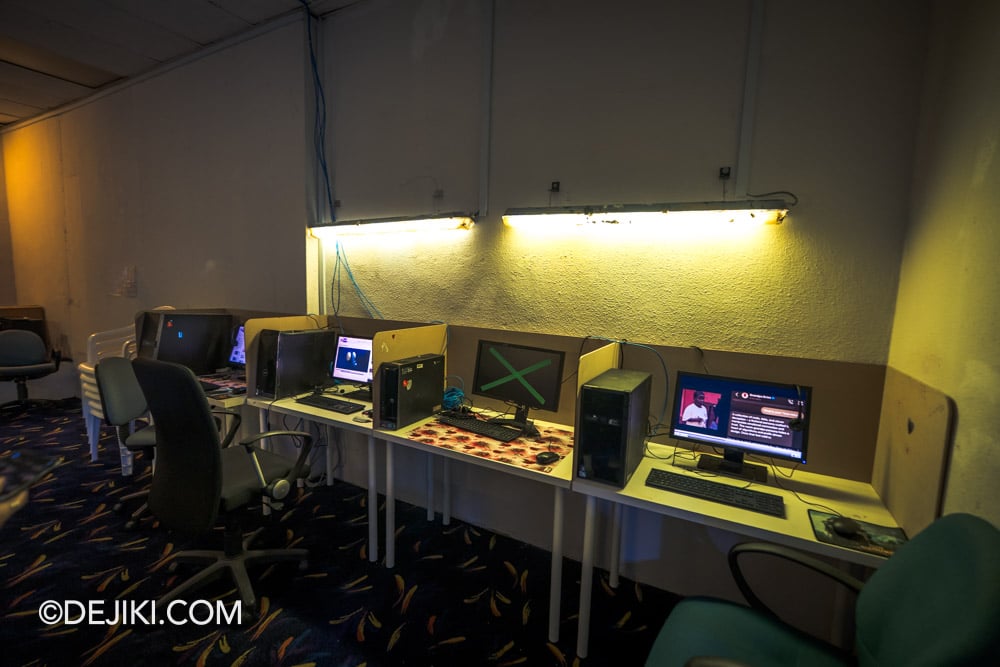
Such cafes were once seen as a literal bridge, a portal to a shareable future where the past was suddenly easy to search for. In this exhibition, however, the computers are running, but the space just feels stuck in time. The installation also brings together the works of 12 artists who communicate through a unique video-sharing platform staged within the café.
Their videos, playlists, and comment threads show how histories that should have been put to rest keep returning to interrupt and complicate the development of our future.
Beyond the malls, another key SB2025 venue is the Former Raffles Girls’ School at 20 Anderson Road, where more new works can be encountered on campus.
Singapore Biennale 2025 at the Rail Corridor: Tanglin Halt Edition
The Rail Corridor, which used to be the train line connecting Singapore to the Malaysia, has been transformed into a green public path. This section of the Biennale uses the area’s history and its surrounding neighborhoods, including Tanglin Halt, Wessex Estate, and a residence at Blenheim Court, to show how infrastructure influences people’s lives and memories.
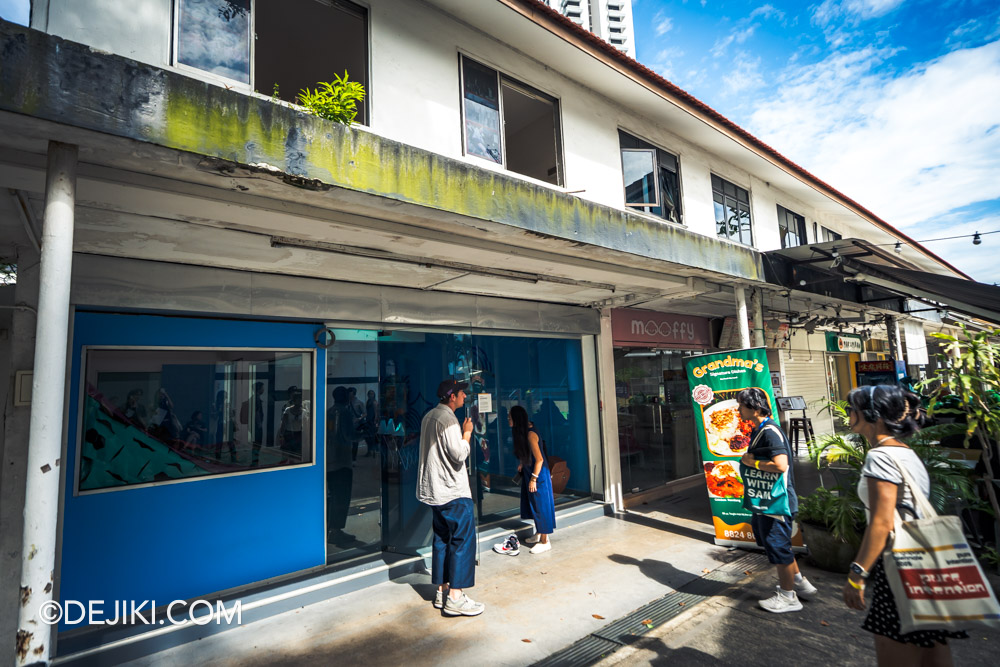
During the preview, I got to explore the installations staged around some of Singapore’s oldest public housing blocks at Tanglin Halt.
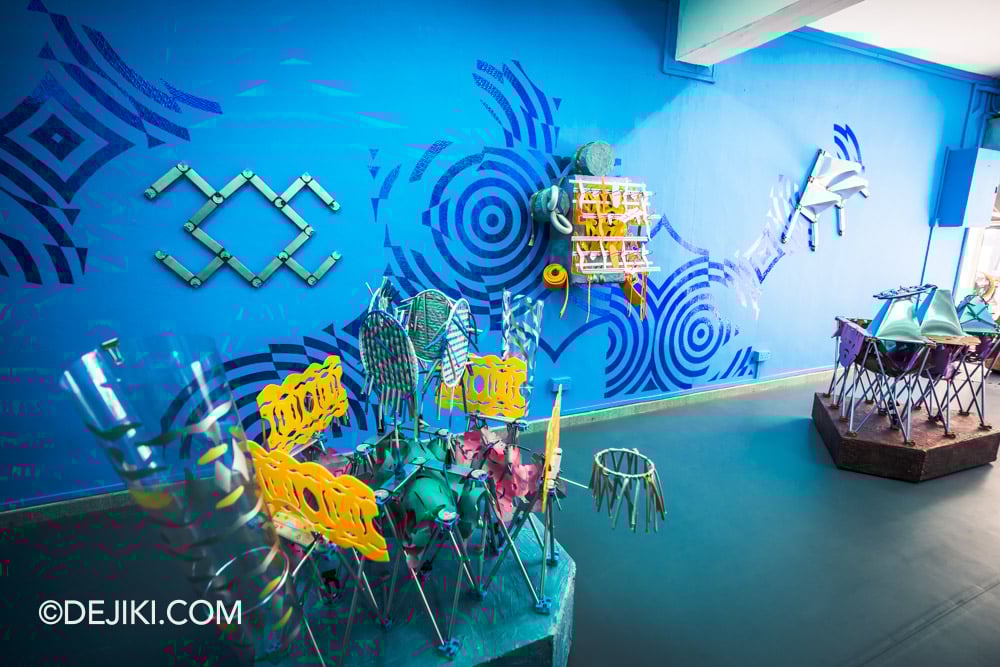
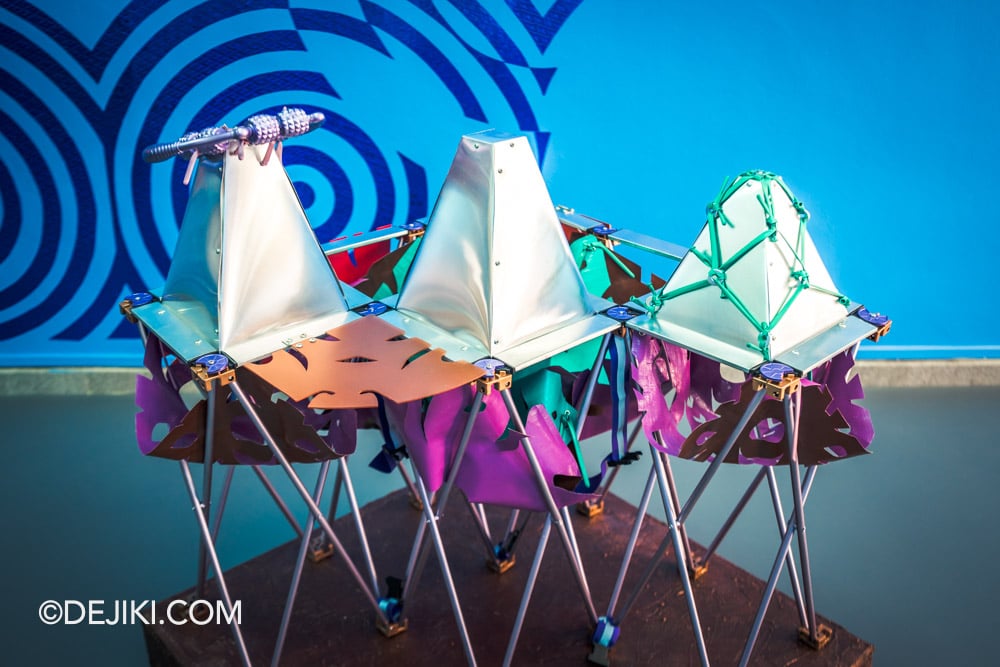
The laugh laughs at the laugh, The song sings at the song (Joo Choon Lin) examines how even small, constant actions can lead to big change. The artwork constantly renews and transforms itself, using shapes based on seeds and fruit to invite visitors to simply observe the rhythms and cycles of life.

In another nearby shophouse, With Hate from Hong Kong (Adrian Wong) brings you into an old Hong Kong film set. Using leftovers from demolished movie sets and a video that connects media clichés to the artist’s own family history, the work explores how popular stories meant to entertain can actually shape our collective memory.


Another shophouse in the area presents a few works within the same unit. First we have Études (Tanglin Halt) (Kah Bee Chow) taking shape in a shop unit that used to be a traditional Chinese medicine store.
The installation is born directly from the shop’s history. The artist treats the old physical remnants, like the marks on the walls and the original shelving patterns, as a kind of “score” for the artwork’s composition. Using structured guides, such as the grid from a piano exam form, Chow decides where to place new components like acrylic piano keys, printed materials, and glass objects. The installation playfully follows and breaks these self-imposed rules, creating a final piece that is a blend of strict structure and creative flexibility.

In a smaller area at the back, another work, Effeminacy (Kah Bee Chow) shows the artist’s mother calmly arranging salvaged flowers at home while watching TV.

Head upstairs and you’ll find two works zoom in on the household casebearer, a tiny insect that lives by gathering the dust and particles (like dead skin) that we shed in our homes, using them to build its own protective cocoon. The Scale of One (Tan Zi Hao) places a cocoon in an oversized “telescope”, while Levelling Schemes (Tan Zi Hao) draws further attention into the tiny particles that form these cases.

Singapore Biennale 2025 at the Civic District
At Singapore’s Civic District, monuments and spaces are transformed with new artworks during the Biennale, inviting audiences to further understand histories and stories within Fort Canning Park and around the National Gallery Singapore. Here’s a peek at what you can find inside the National Gallery.

Earth Play (Seung-taek Lee) takes over a walkway at the Former Supreme Court Foyer. It’s a 7m-wide PVC balloon painted to look like Earth – so massive, that it has blocked the walkway completely.

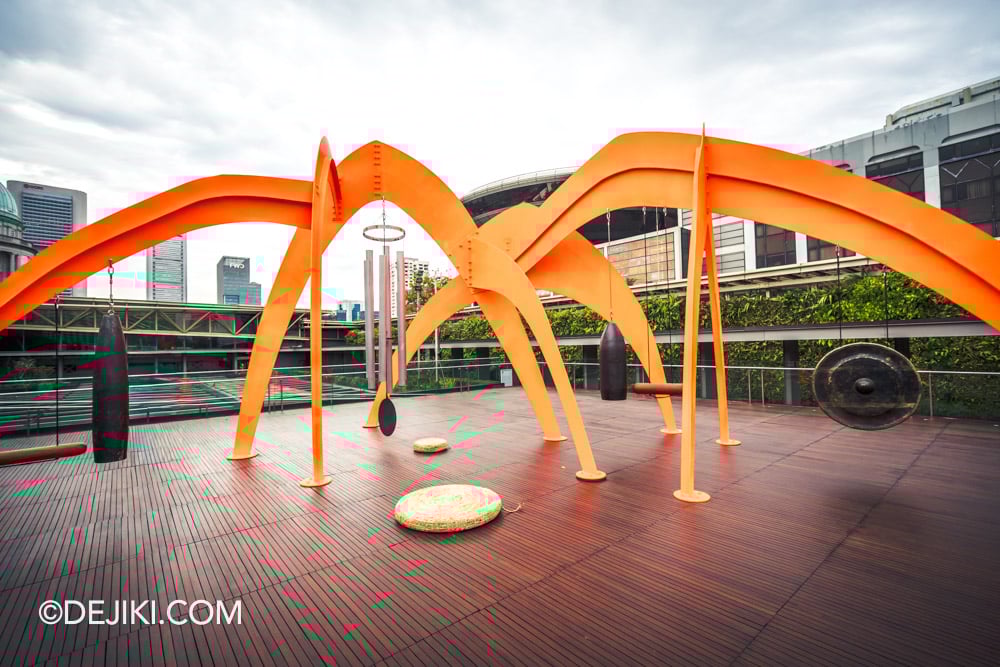
Temple (Tuan Andrew Nguyen) is a monumental interactive work at the Ng Teng Fong Roof Garden Gallery. Painted in a striking “safety orange” color – it’s also the exact color used in Vietnam to mark areas contaminated by unexploded bombs. The bells and gongs of the sculpture are actually repurposed and defused unexploded ordnance recovered by relief organizations.
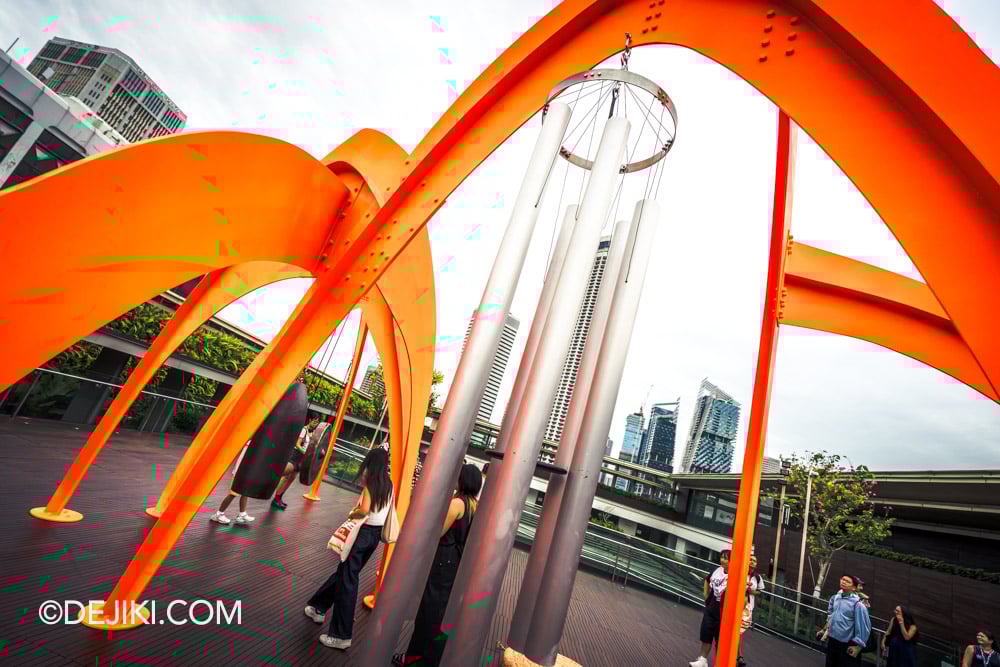
When struck, these instruments are tuned to a specific “healing frequency” (432 hertz). By transforming relics of war into instruments of recovery, the artist invites you to the ‘temple’ to create a healing soundscape, reflecting how objects can hold and eventually transcend the painful memories of their past lives.
Singapore Biennale 2025 Event Info
From 31 October 2025 till 29 March 2026. Numerous sites across Singapore.
Visit the official Singapore Biennale 2025 website for more info.
Singapore Biennale 2025 Ticketing Info
The Biennale uses a hybrid approach, making much of the art freely accessible to the public. Admission is charged for entry to the gallery at SAM.
Tickets start from $25 for tourists and foreign residents, and $15 for Singapore Citizens and PR.
Concession rates are available at $20 (tourists and foreign residents) and $10 (SC and SPR), for seniors (ages 60 and above); Full-time National Servicemen, Overseas students/ teachers.
Check if you can get in SAM for free: Enjoy free entry to SAM if you are a local student/ teacher, a child 6 years and below, or a Person with Disabilities (PWDs) and one accompanying caregiver. Otherwise, much of the other artworks are freely accessible to the public.
Singapore Biennale 2025 Tips for Visitors
As the Singapore Biennale 2025 exhibition spans the island, here are some tips for a fruitful experience:
Map Your Route: Group your visits by location to save time. Use the Official SB2025 Map on Google Maps to plan your route, making sure you hit all the works within a cluster before heading to another one.
Use the Biennale Shuttle Bus to get around: On weekends, there is an official SB2025 service linking key venues, with routes highlighted below. Check out the official page for more details on exact pickup points.
– Singapore Art Museum and 20 Anderson Road
– 20 Anderson Road, Far East Shopping Centre and Fort Canning Park
– Singapore Art Museum and Blenheim Court
SB2025 Ticket Perks: Your Singapore Biennale 2025 ticket for SAM can also be used at the National Gallery Singapore, where you can enjoy complimentary entry to Southeast Asia Galleries 9 & 10 and Dalam. You can also buy the SB2025 tote bag for $5 at SIP at SAM.
No comments yet.